Sunday, June 2, 2013

Final Post: Graduate School -- A Reflection

Forest Fire Blazing Through an Evergreen Forest
The month before I started graduate school I decided to leave a conservative organization to accept a promotion for, in all honesty, promotion's sake. In view of my personal development I don't know if this was the best decision I could make or the worst, but I'm fairly certain pursuing a promotion for no other purpose than for promotion's sake is a choice I likely won't repeat.  As it turned out, I began working in an organization which I describe as nothing less than one of organizational terrorism.   The organization and persons in positions of management were found, in Congressional reports, to follow blatant patterns of mismanagement, abuse and dysfunction. It was a place and culture of incredible greed, corruption and cruel mistreatment of much in its path. Even the Inspector General, a hefty weight in the checks-and-balance process was fired. 

It was the worst job I've ever had in my life. 

Forest Fire Regrowth
It took months, nearly a year, for me to find my next job.  I knew it would only be a plateau where I could catch my breath and recover. Still, I tried my best to help the organization and those around me. Although this organization was clearly broken there were a few who pressed on in the face of adversity to serve the mission but these efforts were often lost in the fray. I don't know anyone who honestly sees this organization able to right its broken parts.

It was the second worst job I've ever had.

In the coursework an interview with Parker Palmer captured much of what I kept seeing:
"I think, in fact, that the work place has become the battlefield of many peoples’ lives.  The place where they feel violence done to their identity and integrity as they become cogs in a machine, or deployable resources and replaceable resources used simply on behalf of some organizational goal or ulterior motive.  And that’s not a nice way to be in the world, that’s a way that murders the spirit and actually if you translate it in terms of organizational bottom line, gets worse work out of people that you would if you extended them respect at least, if not full reverence."
I wanted to leave this job and despite a growing fatigue I could not get past the interview and in all honesty I didn't want the jobs I was interviewing for. But I did begin to see each interview as practice--and through practice I learned to research the organization more intensely and ask the questions I wanted answers to. In the midst of these struggles I had to learn to apply new leadership principles--like the ones I've expressed in this blog. In his interview Palmer may as well have been speaking to me:
 "A leader has to take his or her community, or his or her organization or group through a rough passage, through white water to get to the other side, to get to the place where we can all acknowledge that God ain’t finished with any of us yet. That we’re broken, that we’re all works in progress and we need each other to help put the pieces together, to help make something better happen. "
I began to change my tactics. I found those people who were doing their best and I encouraged them and formed community with them. I spent my time differently; I focused exclusively on doing tasks that made me better and better at what I do--and I let the rest go. I made decisions no one had made before and I stood by them. I refused to participate in abusive situations.  I made peace with the organization.

The day before graduation I was offered a promotion in the progressive organization (amongst my research and interviews) I found most fitting.

I start tomorrow.

Wednesday, May 29, 2013

My Favorite Posts (Pt. 3)

In the final round of my favorite posts I look back slightly as I completed the program on the 10th yet I am wrapping up those last few reflections which weren't fully formed enough (nor did I have the energy) to complete while I was low crawling to the finish line. Is this disciplined effort really at its closure? It's sad for me to say yes (although I want to say no). Graduate school has been such a whirlwind of learning and self-management that I know right now I want to keep these lessons and discipline close to me, yet I also know that I will grow slightly undisciplined and take a breather. I deserve one. But will I get back up on my feet again and continue onward? These are the thoughts weighing on my mind as I review my remaining favorite posts.

Leadership, Justice and Forgiveness was likely the most painful class I have ever taken. Learning about forgiveness wasn't so difficult but opening my heart to atrocity was. I re-learned a truth about myself: I am willing to bear witness. This class ran me through the ringer. As an extrovert I constantly found myself going out and engaging (even amidst great fatigue) in regular social activities because it was the quickest way I could process this pain. Of course asking for forgiveness and readily shedding my ego to forgive others was no picnic in the park, but I am grateful I did. Beyond anything to do with leadership, my life has been radically transformed by the ability to forgive and ask for forgiveness.


By embracing the servant leadership philosophy I began to seek out ways to heal others. Full body listening was a great place to start but when I asked questions and tried to redirect people away from hostility, anger and self-defeatism I found that my traditional understandings of motivation left me rarely able to penetrate the armor of hardened civil servants. So many government workers act as if they are prisoners (I regularly remind them where they are is a choice) and some even hold murderous thoughts (as well as cruel and really, really petty ones). In Murder(ous Thoughts) and Meditation I was deeply moved by the ability of meditation to serve as a space for sacred healing. While I usually don't recommend meditation practice (it truly is too personal of a choice) I do share the stories and outcomes of the prisoners who have completed meditation. So far it has brought a new understanding to many people.

Finally, the latest in my warrior series, Warrior Hall of Fame -- Abbot Phra Acharn Phusit (Chan) Khantitharo speaks to me on so many levels. The ability to know yourself so well that seemingly nothing phases you is exactly what I am trying to develop. This leader also enforced a message in me that peace can tame far more than I have ever given it credit for. From this example I too will continue to face adversity with a gentle approach--perhaps it will become not only my preferred way to resolve adversity but a style which provides little fodder for difficult people.


Tuesday, May 28, 2013

Warrior Hall of Fame -- Abbot Phra Acharn Phusit (Chan) Khantitharo

Abbot Phra Acharn Phusit Khantitharo is hereby inducted into the No Excuses Warrior Hall of Fame and designated as one of an Elite Group of Leaders.

Abbot Phra Acharn Phusit Khantitharo (Source)

What would you do if you were given a diagnosis of terminal leukemia? Phra Acharn chose to become a monk and walk the roads of Thailand, journeying from monastery to monastery.  Along the way he eradicated his fear of death (and apparently his leukemia) and any feelings of fear from wild animals. He settled in a forest monastery known as The Tiger Temple.

As the narrator tells it: "Phra Acharn is not an animal trainer, he has no relevant education but nevertheless he bridles adult tigers and directs them without chains and cages, without any power."  What sort of leader is capable of taking in tigers and not trying to domesticate or assert his will over the tigers but whose ultimate goal is to create Tiger Island--a place where the endangered tigers may live freely, naturally?

As Acharn tells it: "Every single tiger is special. Each one has feelings, thoughts and dreams. These tigers are not here by chance, they came to me looking for protection. Now I am responsible for them." Indeed the story told in The Tiger and The Monk is one where leadership dives to deeper and more complicated levels. Monks are forbidden to work for money and even beg for their food yet the the tigers must be fed and cared for. The tigers are most noticed at the monastery but the temple has also become a self-formed sanctuary started by old, injured animals that showed up. Wild boars, peacocks, deer, water buffalo and horses have formed a "strange community" under the protection of the monastery walls. The abbot and his monks daily walk the tigers on leashes or merely with a hand on the back through this animal sanctuary. It seems unbelievable when one holds a paradigm that leaders cannot manage by peaceful means; however it also seems the most harmonious means of leadership are indeed through peaceful, attentive loving kindness.

Collaborative Leadership Relationship (Source)
"If you learn how to communicate from the heart they will become very tame with you, they will also listen to your commands." Abbot Acharn

Monday, May 6, 2013

My Favorite Posts (Pt. 2)

Stages of Moral Development (Source)
Ethics is a big deal to me so the Semester Summary for this class assisted me in accepting the ethical choices of others even if I found those choices unethical. In part the readings over the course showed me several models of development.  One model which spoke to me and helped me understand less than ethical choices of others was Lawrence Kohlberg's Stages of Moral Development. This model was easy to use and it parallels a bit to Maslow's Hierarchy of Needs.  In my least favorite organizations it became easy to see how adults were trapped in stages they should've outgrown. It was helpful to hold this perspective when communicating with these low-functioning adults.  In fact I began to feel compassion for them. I love being a kid and at times I still am but there comes a time when you have to assume responsibility for yourself and grow into universal ethics.  I also loved finding the documentary Dive! and these dumpster diving people who are living up to their ethics (or civil disobedience) to stand up to waste.  The documentary reinforced my consumer choices to try and think of all parties involved in the food chain.

I actually had the Larry Bird ball as a kid
My next favorite post and quite possibly my favorite of all time came with re-looking at Competitive Leadership. Leaders come in many forms and arenas--and they feed off one another. Larry Bird is one of the greatest leaders of all time (sorry Magic I love you too).  As a kid I read Drive and I watched many Celtics games and all Celtics-Lakers games I could manage. But my favorite times were pacing the living room floor, sucked into the world of a fast-paced intellectual game played out on the court with one bouncing ball which I would follow for hours on end.  Little did I know I was seeing something magical--the formation of a selfless game of basketball created by two fierce competitors who played the game with life-purpose focus.  Bird has influenced me for much of my life.  But as I examined the notion of competitive leadership  in a new lens I saw that he is still influencing me.  I also learned to love his rival because it was that fierce competition that the startling new leadership emerged from.  I have not implemented competitive leadership in my life but only because I have not found that rival who could potentially make me strive for this level of performance.

A Weathered Ed Viesturs (Source)
My next favorite post came from attending a lecture at the National Geographic featuring Ed Viesturs. In Leadership on Top of the World I came to see leadership as even more than service to people. Rather it's the entire output of our actions to the environment and those whom we do not lead but share the planet with.

On top of that, Viesturs is one of the most humble speakers I have encountered. His abiding vision to climb the 14 highest mountain peaks without supplemental oxygen is not so interesting to me as his careful, thought out approach to do it. In particular I am impressed with his record to complete such dangerous goals with no sustained injuries to himself or those on his teams.  Additionally he has set aside his summit on occasion to help others when he noticed other mountaineers poor luck or choices left them in a vulnerable or dangerous position. Of course leadership often entails giving up your advantage so at a minimum others may survive but also so that they may succeed--sometimes even beyond you.

I care a lot about ethics, integrity, professionalism and leaders with a commitment to the growth of others as well as leaders with wildly unique achievements. These posts helped me reinforce that in my daily actions and my overarching personal leadership plan. Bird and Viesturs accomplished huge strides in this lifetime yet both are extremely humble.  This is a reminder for me to keep humbleness on my agenda. It seems when I am humble, I too, am able to accomplish a lot more.  


Saturday, May 4, 2013

No Excuses a la Robin Sharma

Robin Sharma (Source)
A few weeks ago Robin Sharma made a video as an advertisement for an upcoming workshop. I won't be attending it but the few minutes of the video were so powerful and relevant to my No Excuses philosophy I have to share them. He is addressing those who want to be in the top 5%; those who want to be super successful, alter their mindsets and be the best of the best.

"Imagine if that was your standard. Literally you want to be the undisputed heavy weight champion of your field, the best their ever was. So good they cannot ignore you. You literally want to make history not only with your work but with your life."

I would say that is alignment with a No Excuses philosophy. Naturally his number 1 tip came as no surprise to me.

(1.) Cut your excuses in half and double the action you take.
  • You can make excuses or you can change the world, but you can't do both.

Source

(2.) Leave the herd.

  • To have the results only 5% get, have the guts to do what only 5% are willing to do.

  • Most people in the world right now are card carrying members of the cult of mediocrity

  • Genius is an act that threatens people.

(3.) Dig grit.

  • Grit is the number 1 factor to success.

  • Grit means you just don't give up.

(4.) Get fit to be of use.

  • The more fit you are, the more people you can help.

  • The more fit you are, the more you can pursue your vision.

  • The more fit you are, the more you'll have the energy and stamina to change the world.  


I have spent over two years on this blog and thinking about how to shave off those excuses that pop into my head or the ones I sometimes feel myself drifting towards and even questioning people who bring excuses to me, yet Robin Sharma shredded the need for excuses in just a few minutes!  More than anything excuses come between those who succeed and those who don't--and if you think otherwise check closely and see if those excuses and assumptions are true or learned behavior towards fearing failure or being ridiculed. His rallying speech is also a potent reminder to tap into our inner genius and be our potential regardless of what others think of us. In the end we succeed on our own merits which may be recognized by others, but not always. Most importantly, when we are in touch with our inner genius we choose our own definition of success.

Sunday, April 21, 2013

My Favorite Posts (Pt. 1)

I love every post I've written in this blog. Each one took hours to construct and then unmeasured time to incorporate into my life and my leadership style. However I have a few favorites. These are my favorites merely because of how much I learned when I wrote them and how much they have pushed me further into being a No Excuses Leader.

Homeless with Humor
 My opening post holds the theme of humor to handle aspects of adversity--namely funny homeless cardboard signs. These people may dip below the glass being half full but they are surely showing signs of resiliency and hardiness. I try regularly to give small sums to the homeless but more importantly I try and ask how they are doing. The stories of the homeless are often amazing. One of my favorite autobiographies is Land of the Lost Souls: My Life on the Streets by Cadillac Man.  Many people hold strong assumptions about the homeless and try to rationalize why he or she will not give to them.  While these assumptions may or may not be true, if another human being asks in good faith and I can help, I usually will. Mother Theresa wrote this poem that always resonates with me. 


My next favorite post is about Celebrating the Brilliance of Others.  A lot of this program is about learning to be the leader who develops others rather than shouts commands and demands obedience. One way to implement this is to really search for the strengths in others and encourage that growth.  Prior to graduate school I was an adult literacy tutor for 2 years. I worked with the same student and at least initially I realized the bulk of my work was building his self-esteem. He knew how to read fairly well yet he held himself back because there was no one who appreciated his strengths and helped develop them. One thing I miss about tutoring and working with my student is that he kept me humble. He was one of the hardest working and best students I've ever encountered. It took months and months of weekly meetings before he believed me. He taught me to keep humbleness in my life--I am able to do that in part by looking for and genuinely celebrating the brilliance of others.

My next favorite post was learning about John Francis and his 17 year vow of Silence. This man would help me redefine my definition of environmentalism to include the climate of human behavior. He would also help me explore my research design on silence. I have so much more to learn about silence but I've found it tremendously useful to conscientiously close my mouth, open my ears and fully listen to the person who is speaking to me. In most cases I do not attempt to multitask (studies are finding that like anger this trick lowers your IQ by up to 10 points). I believe embracing silence has helped me to be even more calm, silence my ego and accomplish more in less time.

These are my first three favorite posts for philosophy and action-based development.  Also, when I opened this blog I was willing to struggle for growth; I no longer feel that is necessary. I release that need and replace it with the notion that growth can be achieved by other means.


Friday, April 12, 2013

Confucius says...

China Forbidden City Dragon
Source
The required, abridged and tailored text briefly highlights the work of Confucius.  When I saw he was required reading I replayed in my mind all the things I knew about him: He is a revered leader from ancient China; He created well-defined rules of etiquette (it's rude to have guests slice their own food--hence everything should be served in bite-size portions) and frankly that's all I knew about him.  I lived a year in Japan and spent two months in Korea. I loved  both places and the people in them. But I've never been interested in China. No wonder I knew so little. After my glimpse into the teachings of Lao Tzu which I could relate to a little more because of a basic familiarity with Daoism, I realized I had a lot to learn about China's leaders.

I decided to start with a biography on Confucius.  As it turns out the words of the Master in Confucius' Analects ring in bitter irony and parallel what he and every other spurned but noble leader should apply to their life: "Don't worry if people don't recognize your merits; worry that you may not recognize theirs."  Interestingly enough Confucius was (most likely) born to a concubine mother and geriatric father.  At a young age his father died and he and his mother were on their own. He grew up in extreme poverty but what set him apart from others "was an incredible curiosity for learning." His mother encouraged this in hopes that he would one day hold a high government position.  His mother died when he was young and he had an even rougher road ahead of him.

His descendent (75th generation), XiangLin Kong says: "Confucius was driven to achieve the goals he set for himself. He was relentless in the improvement of his character. He said there is no time to stop learning. Only  after you have closed the lid on the coffin can you say you have stopped learning." Despite ardent learning and continuous self-improvement he spent the bulk of his life without a prominent position other than as a teacher and for a brief time as a leader of the state of Lu. He was forced into exile by conspirators, never to regain a leadership position. His vision was for a just and peaceful China. He wandered for 13 years looking for a prince, a leader worthy of him. He did not find one.  During his travels he received feedback from Lao Tzu (as related by Roger Ames):
 "The problem with you sir is that your intelligence enables you to evaluate people critically and when you evaluate people critically you bring danger upon yourself"
At the end of his life Confucius saw himself as a failure with limited influence to make China a place of peace and justice.

So much of his story and desire to lead (and succeed when he gets the slightest opportunity) resonates with me. In my own life and times in organizations I've come to one irrefutable truth in trying times like these: It's not the outcome but the style and grace of leadership which will be remembered.  Nothing about Confucius' life was easy. The narrator sums it up nicely: "He had suffered blows that might've broken a sensitive young man, the terrors of desperate poverty, the heartache of callous rejection. But Confucius would transform life's bitter assaults into powerful, unforgettable lessons."  I can relate to this even more after the course in Leadership and Hardiness. Finally Confucius concluded that despite his desire to end suffering and misery, he was one man and he chose to live amongst humans therefore he resigned himself to the limits of human power.

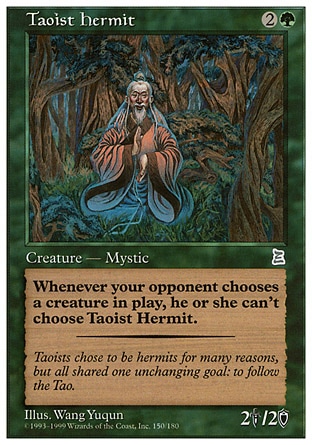
Taoist Hermit
Source

I remember reading a snippet on Lao Tzu once and it said he grew so fed up with the war and strife of China that he opted to leave human society forever.  He was stopped at the outskirts of town and asked to write down his wisdom. He did, handed it over and was never seen or heard from again.

Papyrus roll from about 1000 B.C.After wandering Confucius settled down again in Lu for the last few years of his life still seeking to transform China. He remained amongst humanity but isolated himself in a library. It is interesting to note how these great leaders both were fed up with humanity and chose to live their lives in isolation rather than conform to the lifestyle China had chosen for its people. 

What have I discovered in all of this? Confucianism plays a prominent role in today's China. Confucius is a name world-renowned. When the Confucius of my life shows up...I am going to listen deeply.  Although I am not sure which choice I will make when I can no longer advocate for humanity. I will have to discover more about what Confucius says.

Sunday, March 31, 2013

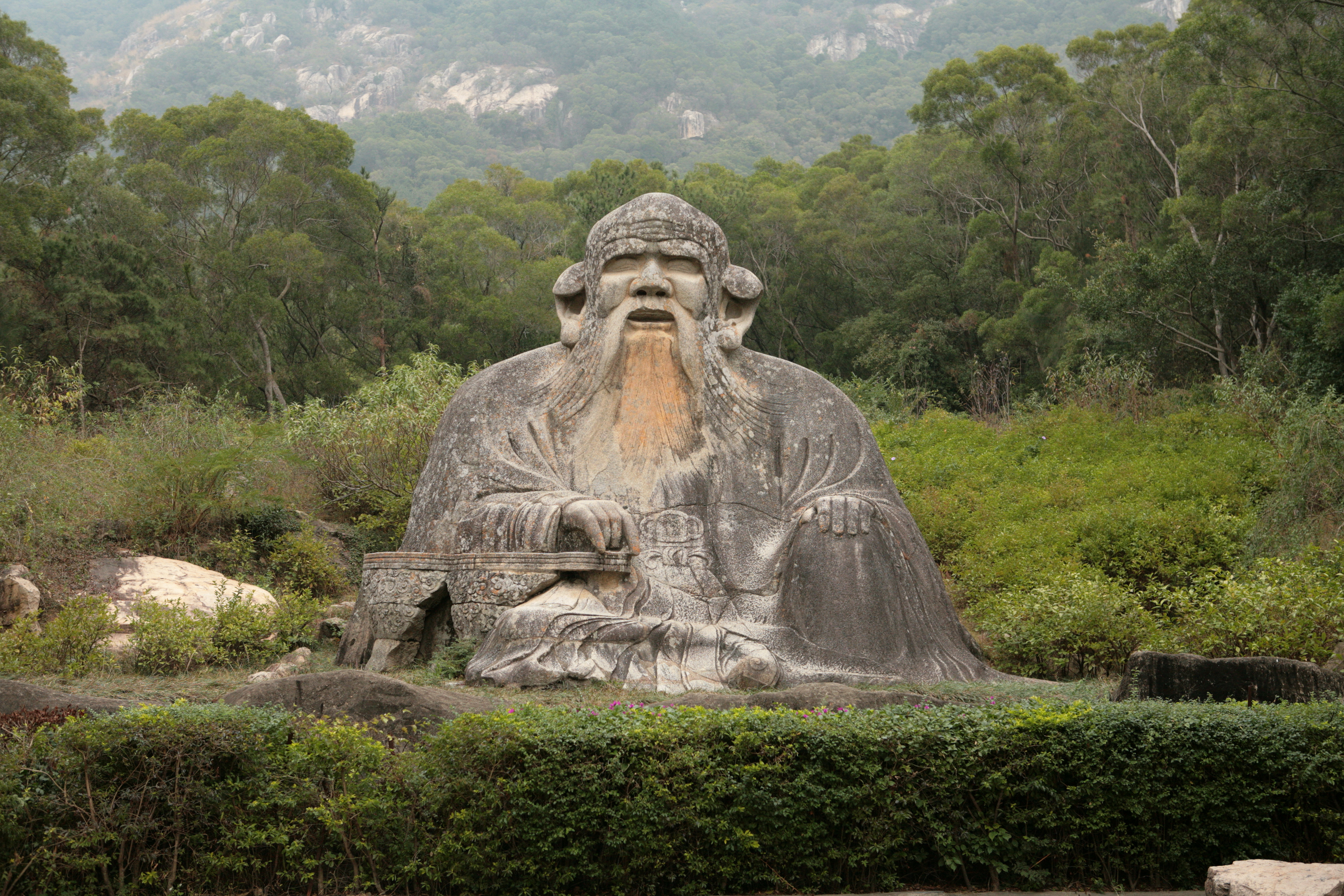
Understanding Lao Tzu's Do Nothing Approach

http://upload.wikimedia.org/wikipedia/commons/d/dd/Statue_of_Lao_Tzu_in_Quanzhou.jpg
Lao Tzu
In our required text we've read some interesting advice from Lao Tzu, book 38 in Tao Te Ching: do nothing but leave nothing undone. Well, this paradox intrigues me. How is that even possible? If I lie around and sleep will my paper, portfolio and seminar questions get done?


The Master doesn't try to be powerful;
thus he is truly powerful.
The ordinary man keeps reaching for power;
thus he never has enough.

The Master does nothing,
yet he leaves nothing undone.
The ordinary man is always doing things,
yet many more are left to be done.

The kind man does something,
yet something remains undone.
The just man does something,
and leaves many things to be done.
The moral man does something,
and when no one responds
he rolls up his sleeves and uses force.

When the Tao is lost, there is goodness.
When goodness is lost, there is morality.
When morality is lost, there is ritual.
Ritual is the husk of true faith,
the beginning of chaos.

Therefore the Master concerns himself
with the depths and not the surface,
with the fruit and not the flower.
He has no will of his own.
He dwells in reality,
and lets all illusions go.

I practiced my own version of doing nothing for quite awhile these last few weeks. In part it's exhaustion, in part it's lack of interest and in still another part it's facing the obligation I committed myself to two and a half years ago to finish what I started despite everything in me screaming not to do it.  Over the weeks of doing nothing I've come to realize I needed to get quiet, press the unimportant to the peripherals and tackle only those things which advance my path. Doing nothing outside of this preferred path is a concept I now understand but have yet to fully implement.

Wednesday, February 13, 2013

Entering...the Capstone

Source
The moment is finally here...the last class before graduation. Again, it's not exactly what I expected. Rather than a critical paper it is...well more of the same.  The forum participation, the reading, group participation and a whole lot of people who (if they are anything like me) have an eagle eye on the finish line.  It feels a lot like work in that we coordinate in groups to give our two cents on topics, create a joint schedule for our project, cross our fingers and hope for the best. I know my heart isn't it. I'm not sure how as a leader one would own this process. It amazes me how so many of us can show up again and again for work that needs to be done but provides no nourishment.

The text reminds me of undergrad where we read cherry picked essays of  some of the greatest thinkers of English literature. Although the selection for this class is more broad and abridged it is oddly enough some of the same stuff I read in undergrad. Back then I didn't realize how good the work was until I read the not so great work of the same period.

But wait, there's more--the individual project requires putting a portfolio together. I'm not certain what the goal of this portfolio is but I am trying hard to scrape my exhausted fanny off the floor and just do the work so I can be done with it. I am also looking for others sources of inspiration to keep my spirits up while I push through the final class.

Saturday, February 9, 2013

Graduate School: Two Year Reflection

http://www.pachd.com/free-images/nature-images/winter-01.jpg 

When I first started graduate school two plus years ago I felt like a tiny tree in a forest of towering giants. I felt overwhelmed and wondered if I could withstand the weight of the assignments.  During the first course while reading Pedagogy of the Oppressed I temporarily thought about quitting. I am grateful I finished the book and learned the valuable lesson that oppressors are also oppressed. Seeing this has helped me stop the cycle of oppression by not participating in it--even when oppressors bully me.

I am grateful that about a third of the way through the program I was assigned to write a reflective blog; as I re-read these blog posts I see the changes in my thinking, my growth as a human being, as a leader and in how others perceive me. Each post was not necessarily tied to the curriculum rather it was an opportunity to dig deeper into a curiosity related to the class theme. Through personally challenging myself to develop further insights and reflect on these insights I see how I have woven the graduate school knowledge into new life choices.

What has changed?

Source
I am at once more committed to helping others yet equally hesitant in choosing whom to help. This is not a judgment issue rather I've come to terms there are some people, situations and organizations I am not able to help right now and I do not want to drain my energy on these sources. With this realization I have finished projects I gave my word on and upon completion I tied off the connection, I released unhealthy acquaintanceships and detached myself from negativity (both in my internal and external world). I feel like I have outgrown the old me, released what was no longer serving me and  I am now ready to make better decisions, choose with whom and how I will spend my time so that I may, ultimately, do good.

This program has not had the strong academic influence I thought I would find, rather it has been a program in which I've willingly reshaped myself and my actions.  Perhaps the online format and disconnection from the classroom and rigorous academic thinking is part of it. I'm doubly grateful for this blog as the lessons I've learned from graduate school are the ones here, mine. Is this a bad thing?  I might've said yes before, but I have to say now I know myself so much better and I am a much clearer thinker. I have a big picture view in which most people need days before they can appreciate my perspective. People come to me regularly with their toughest questions and sometimes I answer them directly (if it's a technical thing) and other times I simply listen and ask probing questions. These people leave with a satisfying answer.

Is that enough for a graduate leadership program? I say it is.


Sunday, November 25, 2012

Research Methods (Semester Summary)

Research is a lot more than reading or taking miniscule measurements in a laboratory; research amongst social scientists provides scholars and average citizens alike a better understanding of how we operate as humans. With that in mind, this class has been a great adventure albeit on shaky legs.

http://www.pachd.com/free-images/nature-images/sea-view-window-01.jpgThe purpose of this class was to design an ethical research project--researcher's choice. To me that is a bit like this photo. The goal is framed but the vastness of the ocean beneath the calm waters belies the magnitude of the project.  The main components of this project were to choose a topic of interest, develop a research question and dig into the literature to uncover what others have already done.  Finally the researcher would devise ethical ways to measure the question and submit the proposed research package for a final grade. No research was to be conducted during this class.

Although I could see other sailboats exploring the ocean I was never close enough to them to feel I had any answers to satisfy my curiosity. At the same time I became more engrossed in my topic of silence and less interested in immediately (or arbitrarily)  assigning an intellectual value for measurement purposes.  It's no secret the class is too demanding for the time allotted and I can live with that. The interesting part is that I do not feel I am anywhere near complete learning on the topic of silence or research. At present I would rather be silent on research methods than violate the truths of silence (finding my own truth in silence) and reflection.  

Friday, November 23, 2012

Research Strengths

In my last post (so long ago) I was trying to discover just what research was--my own in particular.  I was supposed to learn research by reading others' research. Now that the class is over I feel slightly more knowledgeable than when I started. However I do wonder if a coherent presentation of what research is is available.

I recently attended a health conference where speaker Daniel Vitalis mentioned when he was learning tough subjects he loved the Complete Idiot's Guides and children's coloring books on the particular subject.  I rather fondly know why these are choice resources for intelligent articulate adults who want to quickly assimilate information (however the research guide is reportedly not savvy enough for graduate students). So, in my own idiot-fashion I am presenting research strengths (or why we should conduct research).

Research Strengths:

  • A centralized storage for past, present and current thoughts on a subject
  • Identifies gaps in current research 
  • Meticulous overview and measurement of very narrow topics 
  • Easy to reproduce and test for yourself
  • Opens dialogue between many diverse thinkers
  • Helps the writer and researcher thoroughly understand a topic
These are the topic strengths I pulled out of the process. I chose a bit of a radical topic which I am still learning about. With all good research there are no easy answers, only approximations. I can say I am closer to understanding my topic but after the confusion of this class I may need more time off to assimilate all that I learned while reading, reading, reading. 


Sunday, October 14, 2012

Research Limitations

As I round the corner and head for home I feel Methods in Research has been a bittersweet experience for me.  It's no secret this is a tough class with too much expected in too little time. Compound that task with teaching through independent learning, uncertain feedback from fellow students and late-in-coming instructor comments which tell rather than show and the end result feels like an exercise in futility. 
Once I blew past the useful but dry text I realized I had to conduct a literature review, write a research proposal and organize it in a creative way. Top that heavy load off with patchy information on how to do all of this and I realized I was already up a creek looking for a paddle. I thought this was about as much fun as teaching myself how to juggle. When is the right time to throw in that third object? I can feel it, but I can't explain it. And apparently neither can anyone else.  As I fixed lunch yesterday I thought if this research project was an exercise in intellect (like fixing a recipe) it could probably done fairly easily for it would merely be structuring puzzle pieces which already exist. But I chose graduate school based upon something I am passionate about and were I to lose heart and allow the intellectual process to dominate my learning; I would learn very little and care even less.

My research topic has been silence. In the past I could withdraw into silence with practiced ease. It is no discomfort for me to remain silent. Sometimes my retreats were petty and other times it seemed like a better idea to allow the other person to vent their anger without interruption. However in both cases my silence seems to hurt others and leave me untouched. So I wanted to use this time to find a positive way in which silence could be chosen. 

I felt similar sense of frustration when I graduated from college. My major was English and all my life I loved reading. I came to the point in undergrad that I promised myself I could quit reading after I graduated. After I gradated and separated myself from that program I found I still loved to read.  Now I find I truly enjoy the thrill of research but perhaps this online format is the pits. Perhaps it is academia and I which do not agree.

In undergrad I only filled out end of the class surveys for classes I liked. Yep, all those mean (art history), harsh (history of Japan) and mediocre teachers received nothing from me. I highly value insightful feedback and, for me, it takes a lot of effort to think about and articulate it. So I have a working philosophy of only spending my time and energy on the things I want more of.  I haven't filled an end of the class survey out since the third class in this program.

Once I saw it was me who had the issues with the program format that no amount of feedback would change, I could not see the point in repeating myself. In silence I have had to come to grips with my dissatisfaction with parts of this program. In silent reflection I have learned the limitations of an online class teaching research methods. In silent reflection I have realized research methods may not have as much meaning to me as practical life applications. I mentally debate with myself which course of silence is healthy. I wonder, if in deliberate silence I will learn more than silent teaching has ever taught me.

Sunday, October 7, 2012

Murder(ous Thoughts) and Meditation

Dhamma.org
"It is a thin line that separates us from these people who stare at us from inside this cage. The same thing that does not go beyond the threshold of our thoughts have crossed, in their case, the threshold of action. But still we are alike, inside our heads we are all potential criminals" from Doing Time, Doing Vipassana.

 Through much of this graduate program I have sought an answer to who is responsible for the ugliness in organizations.  Is it, in the case of prison the criminals behind bars who maintain aggressive stances to survive? Or is the prison responsible through inhumane treatment to maintain control over agitated, aggressive prisoners?  Of course I've come to realize a complete answer is not available (because it always depends), instead we can only develop a better understanding of the organization and its people. 

Doing Time, Doing Vipassana is a fascinating study that reminds us: "We are all prisoners undergoing a life sentence, imprisoned by our own minds. We are all seeking parole, being hostages of our anger, fear and desire." The film literally shows us how to transform some of the most desperate members of society through sitting in silence. This practice of sitting in silence was replicated in a U.S. documentary 10 years after the first film. I recommend seeing both Doing Time, Doing Vipassana and The Dhamma Brothers to see the power of transformational silence. 
Doing Time, Doing Vipassana from Enlightening Eight on Vimeo.

Through my pursuit to understand silence I have learned to appreciate those who fear silence. For in silence we can no longer run, we must face our true selves. We cannot escape our problems, our responsibilities, our mistakes. Even knowing this, I still study silence; for their is an even greater reward to sitting in silence. That reward is we are not likely to choose or sustain murderous thoughts.

Monday, October 1, 2012

Silence as a Weapon

It has been difficult for me to write this post.  I have learned so many wonderful, positive aspects to silence and that is where I would like to focus. However, when I mention silence to others I am usually bombarded by the person's historical pain from one silent "treatment" or another.  Somewhere along the line of human development silence has crept in the arsenal of human warfare.

Is it an issue of authority?  On the first day of school a child begins to learn to silence her voice.  When you break a rule you are banished to a time out zone, to remain silent. The school librarian is perhaps the most famous shoosher, followed closely by the movie buff.

As an adult if you break the law and are sent to prison your voice is silenced and if you break prison rules you will be sent to solitary confinement. Prison gangs and thugs dominate prison yards, cells and floors; silencing other inmates.

Ok, I'll admit the preceding paragraph is based upon observations of documentaries.  But Western society has long publicly celebrated the strong, silent type male and spread the myth that women talk too much.  It is true silence hurts, even when it is not intended as a weapon.

My Reincarnation PosterI recently saw a documentary called My Reincarnation. It was a familiar father son story. Yet unfamiliar because of the reincarnation twist. The son was a recognized reincarnation of the father's uncle. The son grew up in Italy (watching a Tibetan talking with his hands Italian-style was very amusing) and outside of Tibetan culture. The father taught outside the home and around the world; he was greatly appreciated by the community and the son felt disconnected from his father.  The son's main issue? His father did not answer many questions and the son could not understand his father's silence.

Is the silent person the abuser? What responsibility does the other individual hold to interpret silence? Of course it is more complicated than that. Only one truth seems to hold me for further study: evaluate the motivation behind silence before ruling it a weapon.


Tuesday, September 4, 2012

Silence to Purify the Self

As I work through the mandatory text book chapters which seem little more than narrative links of one dictionary definition to another, I've needed to take regular breaks to clear my cloudy thoughts. At work I've had several conversations with colleagues which have made me see some people navigate the organization like it is a game. I'm not sure which is worse! But as I examine these topics for a commonality I find they have one thing in common: they are mind-numbing through noise.
 
Credit
It's true not all text books are best selling page turners (and I admit this text does inject interesting studies frequently) but when I started graduate school I knew there would be times I had to push through areas to grow and get to the other side of the road. By the way the chicken made it just fine. Another side of me screams NOOO when I hear a person in a leadership position spend a great deal of time telling me how messed up the organization is and then say: "I get paid decent money and life is fine in the organization if I just do what I'm told."

While I am willing to sacrifice a couple of hours to boring parts of a text book and not put up a fight--I am not okay with selling myself out to the long term support of the status quo. At times I am greatly frustrated because I do not know what I can do to make a difference in organizations where people (in my opinion) have sold out. I know many people who feel frustrated in a similar way yet choose to withdraw from the situation and nod with absent eyes until the situation improves. This is one of the reasons why I think I find organizational silence to be so interesting. Because I believe the individual can heal when she chooses to take responsibility for her self development. Allowing others to silence us is not healthy.

Front Cover
Book
Finding silence and allowing it to heal us is healthy. One story I am reading is about Yolande Duran-Serrano in the book "Silence Heals." Her observations have helped me see how noise disconnects me from myself. "I have the impression that the tiredness, the loss of energy that used to occur in the past, comes from identifying with the agitation. We believe our thoughts. We take part, agree, disagree, become anxious, react. We say I want it, I don't want it, we predict we calculate."  For me I need to disconnect from the agitation of others--they do not define me. Instead, I need to get in touch with what is right for me.

Duran-Serrano describes one way of doing this, "And then there is the delicious flavor of silence; a constant sweetness. There is no longer a voice judging, condemning, subduing, draining energy. And even if from time to time a thought occurs, it is so sweet--it leaves a feeling of lightness." So practicing silence can restore my energy, it can purify me from negative thoughts and it can help me realign to myself.

Sunday, August 26, 2012

In Pursuit of Silence


As the last few strands of sunshine in summer break trickle through my fingers I am preparing myself for my next class. I have three classes to complete the program and I apparently saved some tough ones for the end.  In my next class, Methods of Organizational Research, in part, we conduct a literature review.  I was advised by a classmate to have my research question ready before I started the class. My search for a question started with organizational silence. Although I do not have a perfect research question a scant breath or two before the class starts I have delved into silence.

Originally I read about how silence can crush an organization--and there is plenty of literature on that, but I came to sharpen my focus on the benefits of organizational silence. Can the organization thrive in the midst of silence? When is silence appropriate? What does silence mean to the individual who practices it? Obviously I have a lot of questions but few answers. I think that is one of the most promising feelings I have before each class. I know I will emerge more comfortable and confident with the topic and I will (in sometimes the most unpredictable ways) have applied the concepts in a way which deepens my gratitude for the knowledge.

In an earlier post I became interested in John Francis and his 17 year vow of silence. In preparation for this class I just finished "The Ragged Edge of Silence: Finding Peace in a Noisy World." In truth much of the book seemed more than I expected about being silent so we can become better listeners. Even so, I did pick up a gem when Francis' father spoke the words which seem to dig into some of the issues that interest me: "After the [Master's] ceremony my dad came back to my apartment and asked, 'How do you do that? How do you walk into a town that you never been in before and bring all these people together without even saying anything? How do you do that? I really want to know."

Considering his father had uttered the most discouraging words amongst his family, it was great to see the father find value in his son's unusual methods of living in the world. In response to his father, Francis writes, "I looked at him. And in the looking I thought about all the words I would have said--or could have said--about how it is not so much what we say without lips, but what is in our hearts, and how we all long for that kind of straight talk. When we can listen with our hearts, there is nothing that we cannot do together. And how do we listen with our hearts? The answer is with love: talking straight from the heart." This advice, of course, is wonderful. But as I just stepped into this topic I have some work to do to find out how to apply this in an organization.

Friday, August 24, 2012

More on Forgiveness


I had lunch with a friend the other day and we began talking about forgiveness. My friend did not buy my graduate-school-developed  perspective that forgiveness is something which should be given when the individual is ready whether the perpetrator has requested it (or is aware of it) or not . In fact he said, is that what forgiveness means? I thought about the meaning a lot and looked more closely at the word, in pieces.

For.  Give.

Oh--I thought it is a gift for me, the perpetrator, for all.

Forgiving Dr. Mengele PosterOne amazing Auschwitz survivor says: "Forgiveness to me means that whatever was done to me is no longer causing me such pain that I cannot be the person I want to be." In Leadership, Justice and Forgiveness we read Simon Wisenthal's book The Sunflower. In it provided the cultural background for me why those in the Jewish faith do not believe a person can forgive a crime or criminal on behalf of anyone but themselves. Yet Eva Mozes Kor does just that--to a vicious concentration camp doctor who performed horrific medical experiments on twin children.

On the 50th anniversary of liberation Kor made the unprecedented decision to forgive all Nazis in her own name. "When I wrote my declaration of amnesty I still wasn't exactly sure what I was doing. But once I read it and signed it the feeling of complete freedom from all the burdens, the pain inflicted upon me. It's a life changing experience to be free of that pain. Because just to be free from the Nazis that did not remove the pain they had inflicted upon me." When I see leadership actions like Kor's, I am further pushed to refine my approach to organizational problems. People used to speculate at work why I don't engage in organizational battles. For one thing I think it is a misdirected use of energy, exhibits poor interpersonal skills and almost guarantees I will have to atone for a mistake or forgive a person in the future. I would rather avoid that headache altogether.

Sometimes I think the world is absurd and it is best to observe rather than participate. During these times when my life seems to be in a valley rather than a peak I observe the story of Kor who was repeatedly rejected for employment because of her accent. I see this amazing woman shrug off this limitation, square her shoulders and remark "I was so surprised no one was going to give me a chance, after all I survived Auschwitz!" Her strength is awesome and she inspires me to make my first attempt at dealing with adversity with a dose of kindness. Learning how to forgive has taught me to see forgiveness as necessary, and also something to foresee and circumnavigate.


Sunday, August 19, 2012

Leadership and Storytelling (Semester Summary)

Storytelling is a fabulous treat. Good storytellers will never go out of business--humanity craves a powerful story. Over the course of this class I have become much more aware of the stories I and those around me tell. With that awareness I have played and explored with story structure, content and emotional impact.

In this class, each story I crafted was mentally strenuous. Why? Because humans love a good story and when disappointed by a story they provide immediate feedback. Sometimes they don't have to say a word. So, the pressure to tell a good story is a heavy weight. I have found a leader can be loved or hated for his or her story.  I have spent a good deal of time reflecting on what I have learned in this course. In some sense I seem no closer to being a storytelling leader than when I began the course. Perhaps it's that good stories are elusive.

http://www.shawshankredemption.org/_benchcol.jpg
Andy and Red (Credit)
On that note, I took a different perspective of a favorite movie to observe the influences of a leader telling and retelling a story.  As I rewatched Shawshank Redemption I began to see who was telling the story.  I have always thought the story was about Andy Dufresne's trip into the depths of misery and triumphant climb out of it. This time however I realized the story is told by Red and the story is about Red's redemption.

During Red's parole hearing speeches he gives positive but canned affirmations that he has been rehabilitated in prison--and his parole is consistently rejected. Through the evolution of Red's story we find he is not in denial about his transgressions, "the only guilty man in Shawshank" and lives openly in prison as a con man who "knows how to get things."  As time passes he admits he's an "institutional man" who doesn't think he can make it on the outside. To which Andy counters: "You underestimate yourself."

Here is where the beauty of a leader telling a good story can change the course of a person's life. Yet it is also the part which caused me the most deliberation in telling my stories.  Over summer break I've looked deeper and found Parker Palmer's "Let Your Life Speak:  Listening for the Voice of Vocation." It's a fabulous book about finding our calling. As a leader Palmer reminds us if we are in the wrong position we can do great harm to those under our charge.

"If I try to be or do something noble that has nothing to do with who I am, I may look good to others and to myself for awhile. But the fact that I am exceeding my limits will eventually have consequences. I will distort myself, the other, and our relationship--and may end up doing more damage than if I had never set out to do this particular 'good.' When I try to do something that is not in my nature or the nature of the relationship, way will close behind me."
Stories should not be used to manipulate and persuade people. They should be carefully constructed from the leader's authentic self to enrich the organization. It's no wonder the stories I wrote for this class were so challenging--I had to go deep within myself to find the story. Storytelling is so fundamentally human that we all understand immediately and intuitively when someone is not telling the full story, or cheapening it with a personal agenda.

A No Excuses leader may need to finely tune her or his diplomacy skills but should always tell an authentic story for the growth of all. To do that, the leader must know his or her staff, place the others highest needs at the top of action list and with humbleness tell the group's story so the emotional impact fuels the group forward.

Sunday, August 12, 2012

Warrior Hall of Fame -- Pam Warhurst

Pam Warhurst is hereby inducted into the No Excuses Warrior Hall of Fame and designated as one of an Elite Group of Leaders.

pam warhurst
Pam Warhurst (Credit)
Warrior Warhurst leads us into dialogue and action to build kindness towards one another and towards the environment. Warrior Warhurst started a revolution by sitting around the kitchen table with friends and collectively deciding food was a universal language a leader can use to help others think and see differently. Therefore without waiting for permission, funds or the development of a strategic plan these warrior volunteers united with local artists to creatively plant an edible landscape.

How did the community edible plant revolution take root? Warrior Warhurst took her message out to the people in her local community and said: "'We are all part of the local food jigsaw. We are all part of the solution.'" Warrior Warhurst acts on the familiar phrase made popular by Margaret Mead: "Never doubt that a small group of thoughtful, committed citizens can change the world; indeed, it's the only thing that ever has."

In an environment of complacency which allow others to make our food choices for us Warrior Warhurst is prodding us back into community choices. In the genesis town they are growing and sharing the yields of vegetables, fruits and herbs. In return the population of Todmorden, UK is growing in resilience, economical confidence and "starting to reinvent community ourselves." A No Excuses leader knows: we choose who we want to be.

Warrior Warhurst has a lot of pluck. Her TED speech is full of vigor and energy and opens with a mind bending thought: "The will to live differently can start in some of the most unusual places." In all of her successes with this initiative Warrior Warhurst regularly reminds us she and her cohorts are just volunteers, and this project--it's an experiment. Leaders have one commonality and that is to give. Beginnings often aren't smooth and flawless but we can reshape our views into action experiments. If nothing else--if we plant kindness, we have achieved great success.